Conto à Tua Maneira
Conto à Tua Maneira is an experimental editorial project developed in the third year of a Communication Design degree, within the course Projeto 4. The project explores non-linear reading and reader agency, reinterpreting a text by Raymond Queneau as a mutable and interactive editorial artifact.
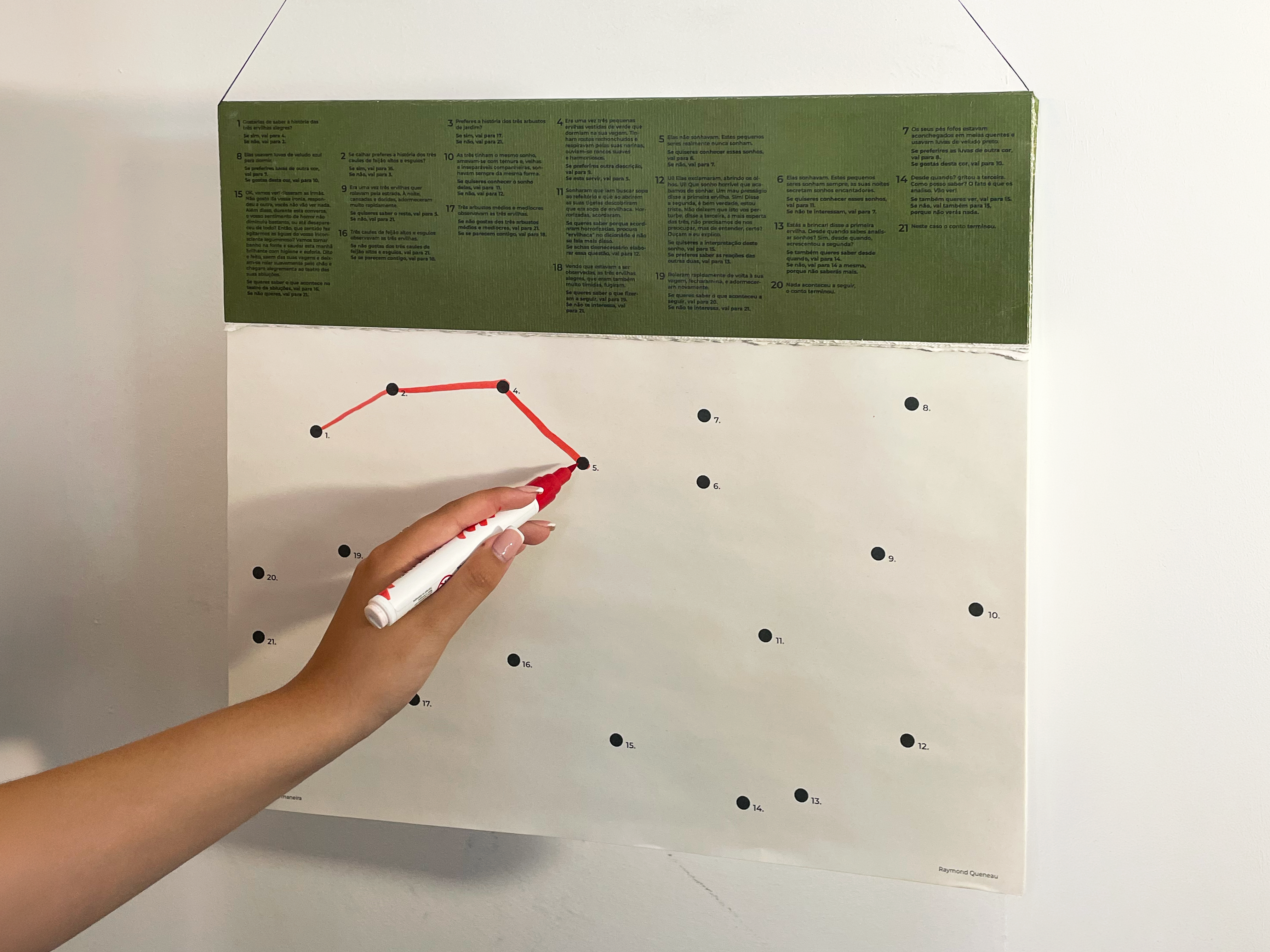
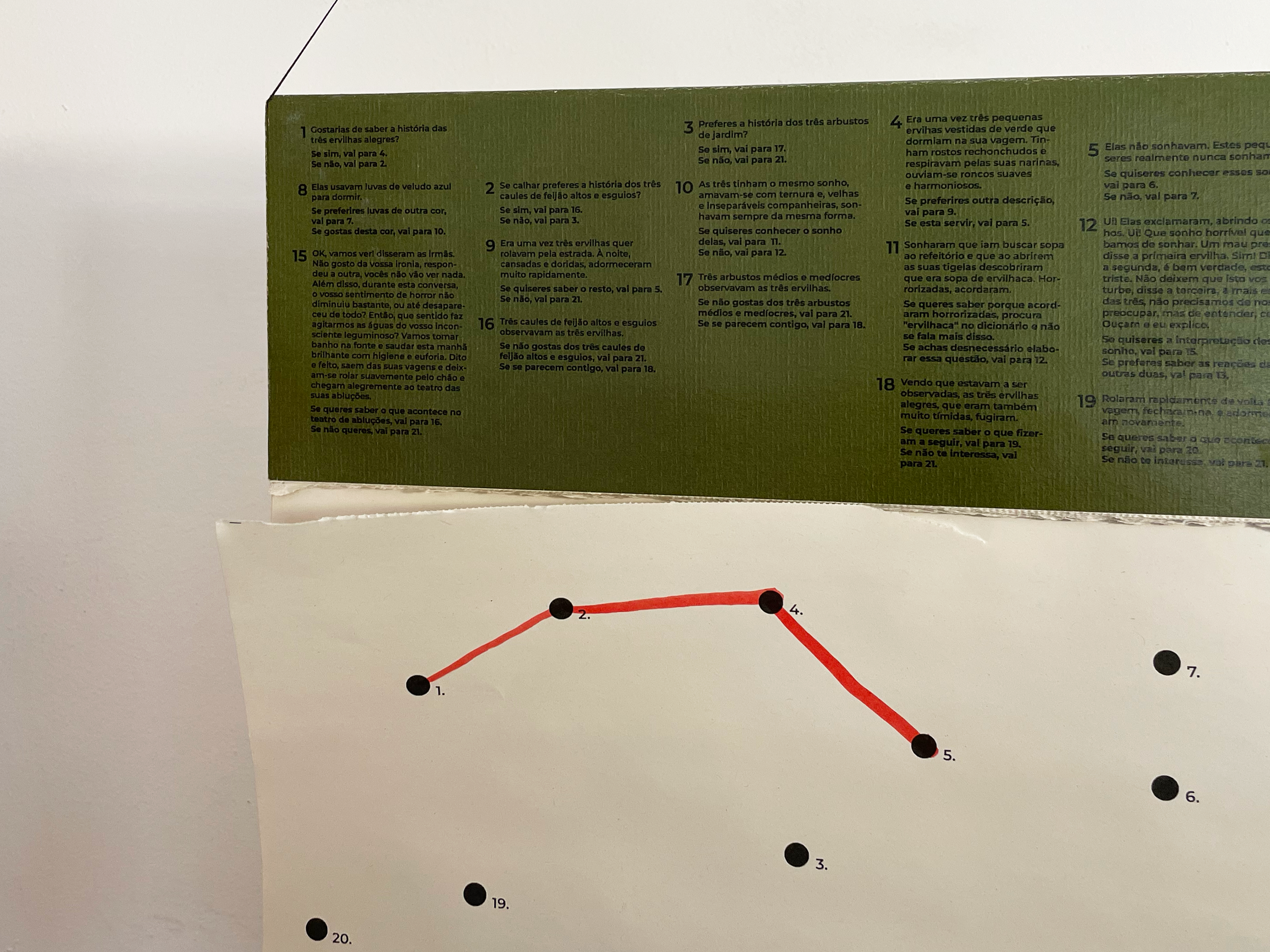
The inspiration came from childhood connect-the-dots games, recontextualised within a structure reminiscent of a tear-off calendar. The central idea is simple: as the reader builds the narrative, they choose their own path — and that choice translates into a unique graphic mark. Each route generates different shapes, different colours, unrepeatable results.
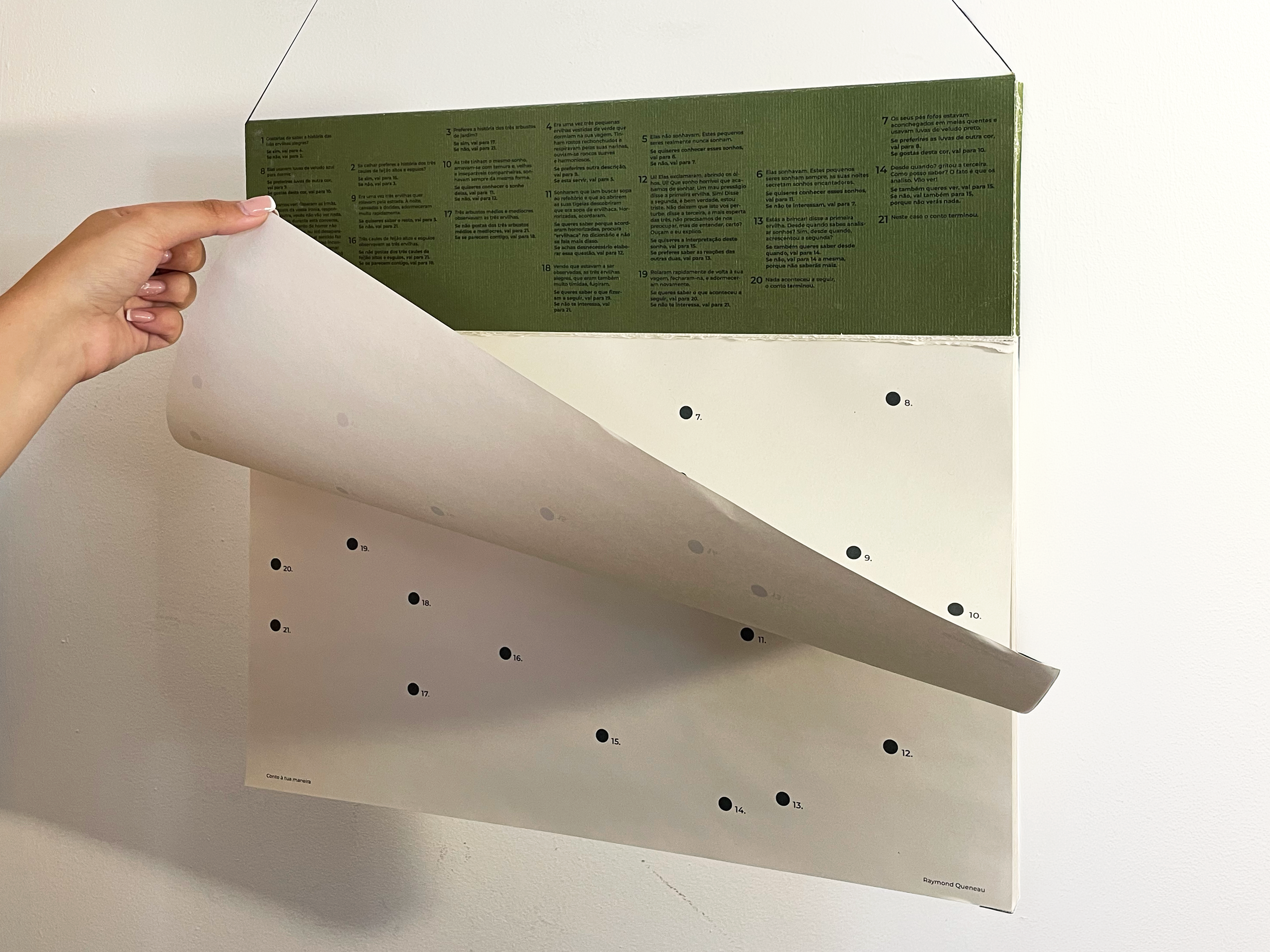
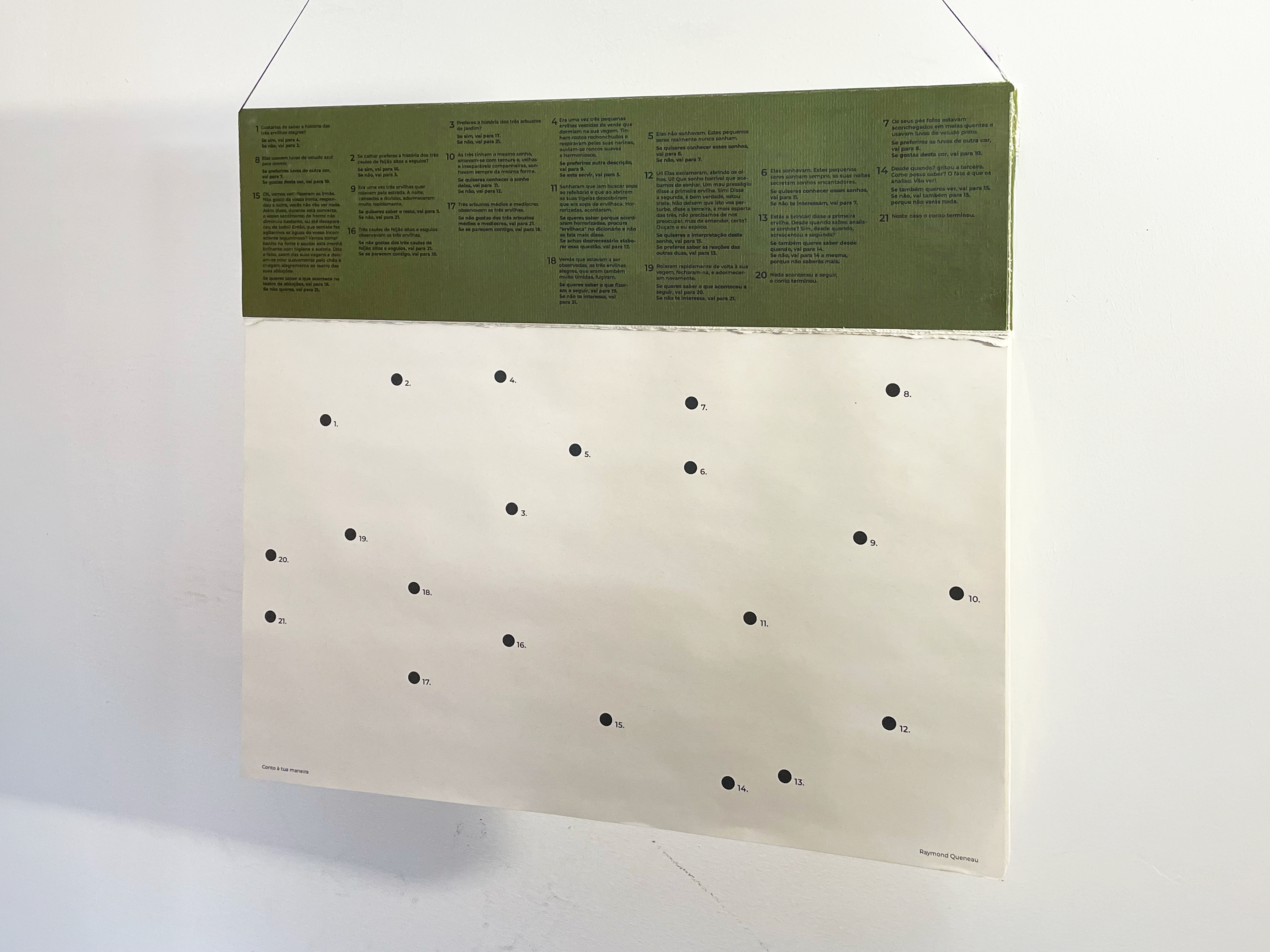
Since the content generated by the reader is so rich and unpredictable, it made sense for the editorial base to be its opposite: clean, structured, and contained. The object is composed of sheets with a fixed table at the top where the story is divided into narrative points, and below it the game itself — just numbered dots on paper, waiting to be connected. At the end, the sheets are perforated, allowing each reader to take their result with them: a personal narrative, visually unique.
Conto à Tua Maneira positions the reader as co-author — design defines the system, but it is the reader who builds the story.
Conto à Tua Maneira
Conto à Tua Maneira (2025) is an experimental editorial project developed in the third year of my Communication Design degree, within the course Projeto 4. The project explores non-linear reading and reader agency, reinterpreting a text by Raymond Queneau as a mutable and interactive editorial artifact.
The inspiration came from childhood connect-the-dots games, recontextualised within a structure reminiscent of a tear-off calendar. The central idea is simple: as the reader builds the narrative, they choose their own path — and that choice translates into a unique graphic mark. Each route generates different shapes, different colours, unrepeatable results.
Since the content generated by the reader is so rich and unpredictable, it made sense for the editorial base to be its opposite: clean, structured, and contained. The object is composed of sheets with a fixed table at the top where the story is divided into narrative points, and below it the game itself — just numbered dots on paper, waiting to be connected. At the end, the sheets are perforated, allowing each reader to take their result with them: a personal narrative, visually unique.
Conto à Tua Maneira positions the reader as co-author — design defines the system, but it is the reader who builds the story.